

Professional cargo bikes : a powerful CSR tool and a strong branding asset for businesses
Temps de lecture : 4 min • 28 juil. 2026
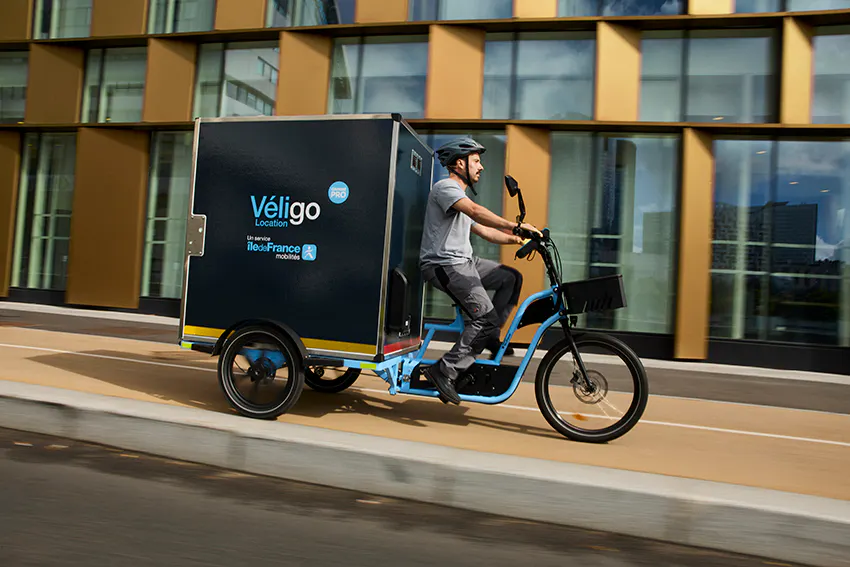
Integrating a professional cargo bike into business operations is no longer just an eco-friendly initiative: it is a strategic decision that improves operational performance, environmental impact, and company image at the same time. In a context where regulatory, economic, and societal pressures continue to grow, cargo bikes are emerging as a strong symbol of commitment and innovation.
A concrete CSR advantage for businesses
Cargo bikes make it possible to immediately reduce the carbon footprint of professional travel. According to the findings of the European Cyclelogistics project, 51% of motorized urban freight trips could be completed by bike.
For businesses, regardless of their industry, this represents significant decarbonization potential that is both easy and quick to implement.
The benefits of this active mobility solution are numerous:
- Reduced CO₂ emissions by replacing traditional light commercial vehicles. Cargo bikes also have a total cost of ownership (TCO) estimated to be two to three times lower than that of a utility vehicle*, particularly thanks to lower purchase, operating, and parking costs.
- Improved employee well-being through reduced stress linked to parking constraints and easier travel across urban areas.
- Greater professional accessibility, since this mode of transport does not require a driving licence.
Cargo bikes therefore meet the environmental, social, and economic pillars of CSR initiatives.
A powerful branding tool for your business
Beyond its carbon impact, the cargo bike is a strong communication tool and a valuable brand asset. Customers are increasingly sensitive to companies’ sustainability commitments, and adopting cargo bikes demonstrates a clear and visible stance.
For a business, using a cargo bike means:
- Bringing CSR commitments to life in a concrete way
- Strengthening brand image by embracing modern mobility solutions
- Creating a closer relationship with customers
In sectors such as craftsmanship, home services, and local retail, cargo bikes can even become a differentiating commercial asset that inspires trust and credibility.
A high-performance operational tool for everyday use
Adopting a professional cargo bike is not only about image and sustainability: it also boosts productivity, particularly thanks to smoother travel and the elimination of parking constraints.
Every sector can benefit in concrete ways :
- More daily interventions for tradespeople and technicians
- Improved punctuality for healthcare professionals and home service providers
- Faster and more reliable deliveries for local retailers
- Better field presence for public services
The cargo bike thus becomes both a performance tool and a driver of social and environmental commitment.
* Urbike (2023). Financing your cargo bike: a practical guide to understanding the costs and funding options available to support your transition to cargo bikes. cAIRgo bike project, Urban Innovative Actions 2020–2023.
Discover the Véligo Location cargo bike range
To support professionals in their transition to active mobility, we offer a complete range of electric cargo bikes specifically designed for professional use. Robust, versatile, and adapted to everyday needs, these cargo bikes help simplify travel, optimize routes, and reduce the carbon footprint of your business activities.
👉 Discover the Véligo Location cargo bike range and find the model best suited to your business needs.
These articles may interest you
Cargo bike, a key solution for urban logistics
Over the past few years, cargo bikes have become one of the most effective ways to reinvent urban logistics. They are now at the heart of sustainable mobility strategies for businesses, local authorities, and retail operators. The Île-de-France region alone accounts for 40% of France’s professional cargo bike fleet, representing nearly 1,450 bikes in 2024.
Successfully transitioning to a cargo bike as a professional
As a professional, the transition to using a cargo bike in your activity begins with a precise analysis of your daily uses and routes.